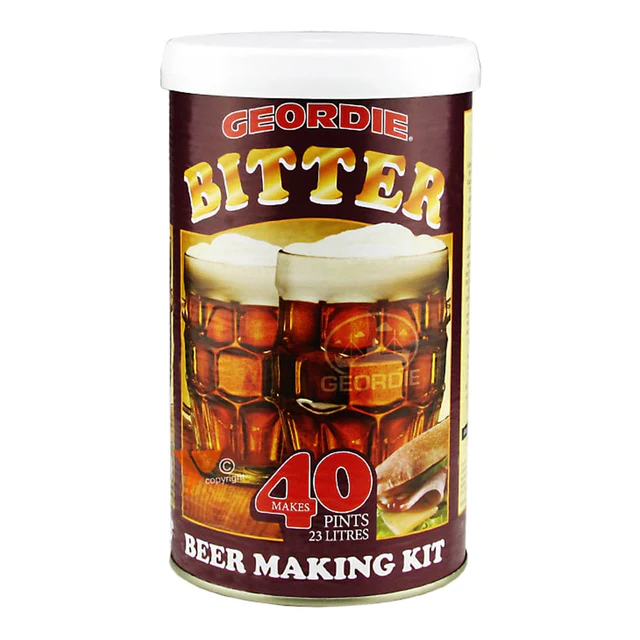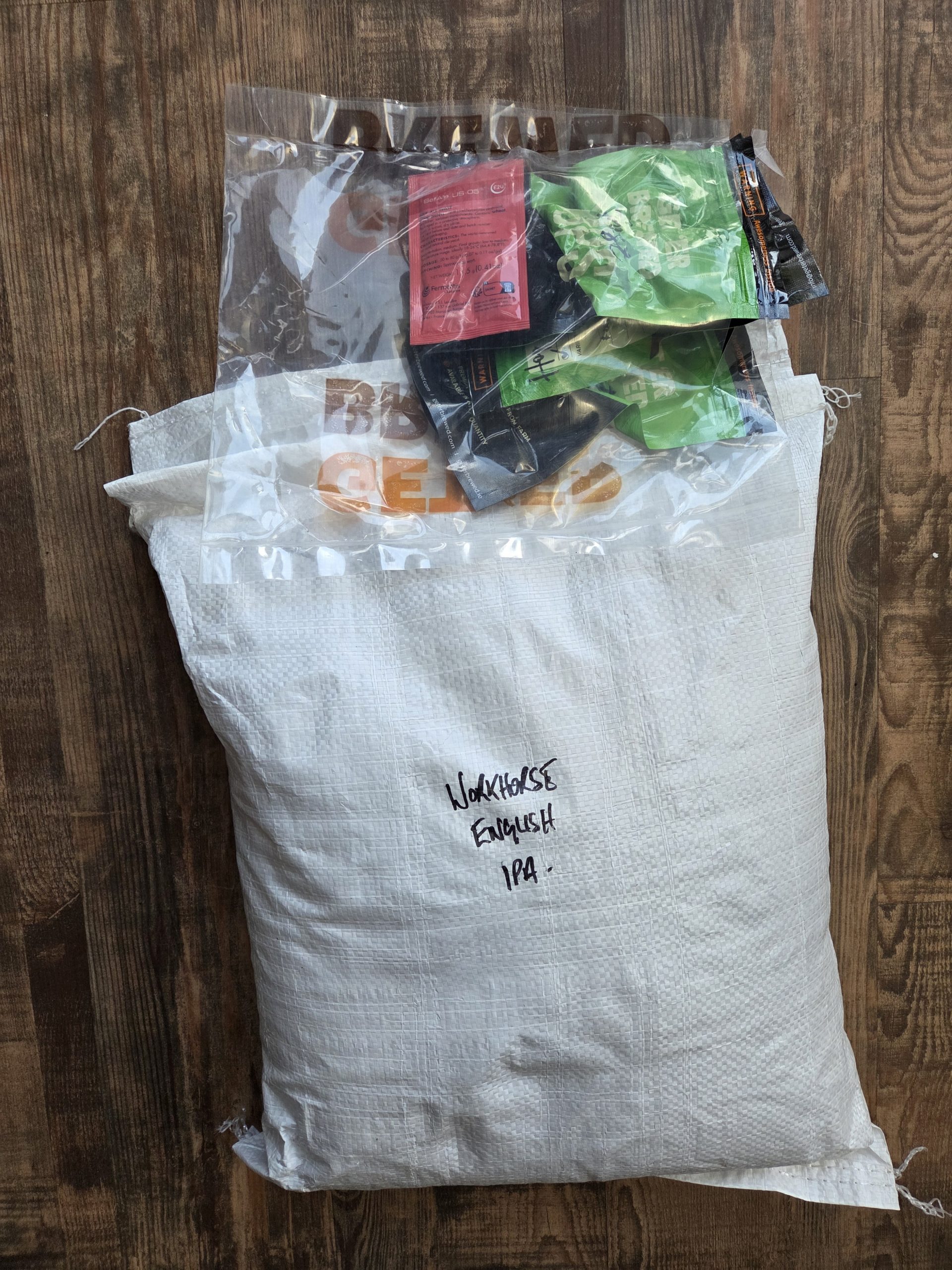

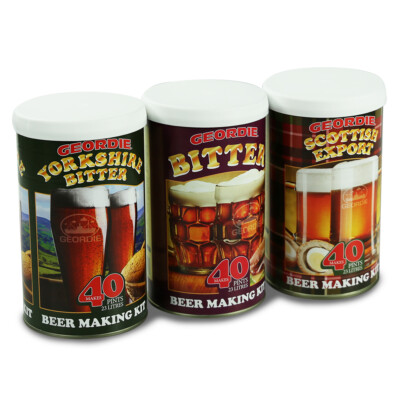
As the title suggests, I wanted to write a bit about beer kits and why they are a brilliant entry point into homebrewing.
So, what is a beer kit? What does it contain? What’s the brewing process? all good questions.
A beer kit is usually made up of malt extract and a packet of yeast. The only other ingredient you will need to provide is sugar (more on this later).
In terms of equipment, a number of homebrew stockists offer homebrew starter kits, typically comprising of a 25 litre bucket with lid and airlock, a paddle or long spoon, a syphon and a tub of sanitiser. Whilst these kits vary in price. At the time of writing, there are kits as low as £25 in the UK. When you consider that the cheapest beer kit is around £15, and once you’ve bought sugar, you could have your first 40 pints under your belt for not a lot of money.
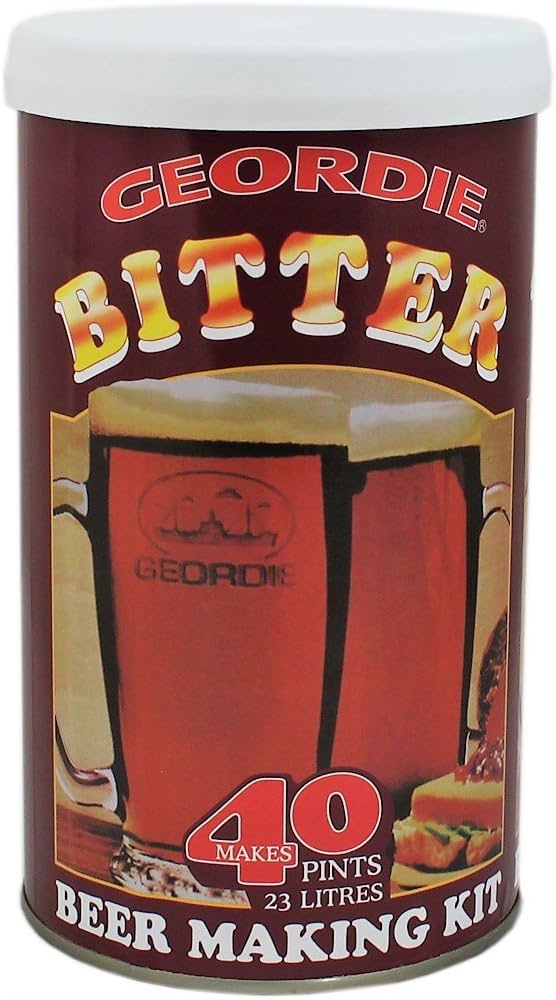
So back to the beer kits. What exactly are they? The bulk of the kit is malt extract. This extract eliminates a number of steps in the brewing process in order to simplify and speed up what we normally refer to as “brew day”. If you were to brew from scratch, you would need to mash the grains in water to extract the sugars and flavours. Mashing involves keeping your water at a specific temperature (usually around 67 degrees Celsius), for a pre-determined time (typically an hour).
The resulting sweet flavoured water is known as the “wort”. The wort would then be boiled and hops added to flavour and bitterness. The wort is then crash cooled down to around 21 degrees Celsius before the yeast is added to start the fermentation process.
The malt extract in the beer kit is wort that has gone through the mashing process, then around 80% of the water is removed, leaving behind a thick syrup.
Assuming you have sanitised all your equipment, you warm the malt extract within its container by putting it in a pan of hot water. This makes it softer and easier to pour into your fermenting bucket. Once in, mix it with warm water and sugar, before topping up with cold water to make 40 pints.
When the mix is around 21 degrees Celsius, sprinkle the yeast on top, close the lid and insert your air-lock, and wait for the magic to happen.
Now the problem I have with these kits is that the instructions will state “leave for 8 days then bottle”, or words to that effect. I have followed these instructions in the past and as a result, you have something completely undrinkable on your hands.
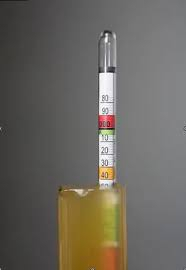
The point I first managed to make a drinkable beer was when I learned how to use a hydrometer. I had one as part of my starter kit but largely ignored it as it looked confusing.
Even if you don’t learn how to use it to calculate the alcohol content, at least use it at the end to see if fermentation has finished. By that, i mean wait the allotted time, pour some of your brew into the sample tube and stick your hydrometer in. When it finishes bobbing up and down, note the number where beer comes up to.
Then leave your homebrew for another day or two and repeat the process. If the number changes, leave it for a few days as it’s still fermenting. When you get the same reading for a few days on the trot, you know it’s safe to bottle.
Patience is key here. Whilst the instructions might say leave it for 8 to 10 days, in my experience it can be anything up to 3 or 4 weeks, depending on ambient conditions.
If you bottle it too early, it will taste horrible and worst case scenario, the bottle may explode. When you do bottle, don’t forget to add a little more sugar for priming (in other words, to make it a bit fizzy).
If you bear the above in mind, you will be able to make a drinkable homebrew for very little money. As I said at the beginning, it really is a good introduction to brewing and you can produce something that you will be proud to give to your friends.
Hope this gives you an idea of what is involved with these beer kits but feel free to get in touch with any questions!