
Many, many years ago, I discovered a love for real ale. It happened when I nervously first walked into a bar and hastily ordered a pint of Waggle Dance (recently relaunched by Young’s). This love that was not shared by my peers at the time. Granted not many at that age would (I may have not quite been legally old enough to drink). It was only when I went to university that I made new friendships with people whom equally enjoyed a pint of cask.
After the first year in student halls, a number of us moved in together. Returning after the summer, one of my friends declared that he had been dabbling with homebrew. At this point, he produced a couple of 2 litre plastic bottles, full of golden liquid. He kindly poured some out into a various assortment of ‘acquired’ pint glasses and we raised it to our lips, drinking suspiciously.
It was unexpected just how drinkable it was. Some would say nice! And at around 5%, the strength was not to be sniffed at.
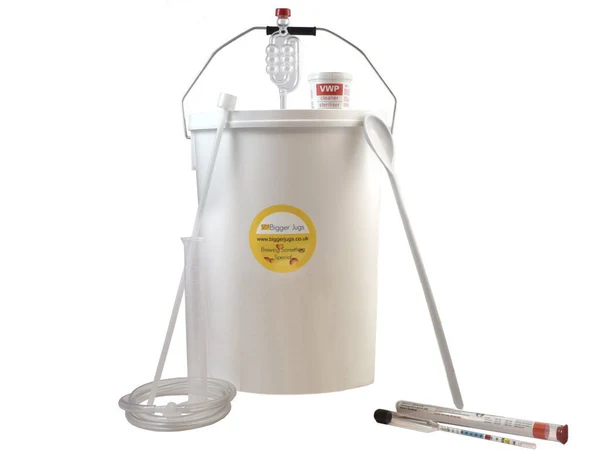
But it would be another year or so later when I finally decided to dabble myself. I purchased a starter kit online, consisting of a 25 litre bucket and lid, along with an airlock bubbler, sterilising solution, thermometer and hydrometer. I also think there was a syphon of sorts, comprising of some sanitary grade plastic tubing, a rudimentary clip and tap. The kit arrived and after excitedly unpacking it, just as someone once said to their dear Liza, there was a hole in my bucket. Well a crack at least but the result was the same.
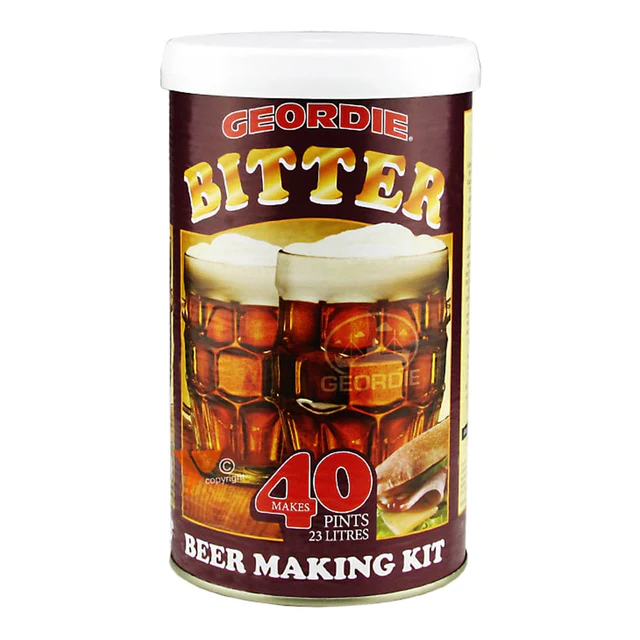
The suppliers were on their game and were happy to send out a replacement. In the meantime, I had rushed to Wilkinsons (later rebranded as Wilkos), and bought my actual first beer kit. The kind that comes in a giant tin can.
At the time, I remember most of ‘can kits’ were made by a company call Geordie. With options such as Bitter, Yorkshire Bitter and Scottish Export. The can was basically concentrated wort (malt extract) and came with a pouch of yeast.
The concentrated wort was like treacle and you had to boil the can to soften it. This would be mixed with water to create about 23 litres of beery liquid. When the temperature was cool enough, the yeast was to be added and the concoction left for 7 – 10 days in the bucket, before being bottled.
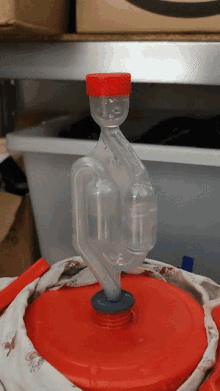
I dutifully did this, enjoying the soft ‘pop-pop-flubble’ of the bubbler whilst my anticipation grew. After exactly 10 days, I ran to my nearest supermarket to buy their cheapest own brand soft drink that was then emptied down the sink in order to leave me with enough empty vessels to bottle my brew.
I also purchased a pack of table sugar to prime my home brew. The instructions were clear that I was to use half a teaspoon per 500ml bottle. I had 2 litre bottles. And a table spoon. So I did what any energetic, sharp minded person would do and guessed. The final solution was to be left for 10 days before you could enjoy it.
Come the 10th day, I reverently opened one of the bottles and poured. It looked like beer. Well, beer without a head. Or any real degree of fizz. And it smelled like beer. Kind of. But what I wasn’t prepared for was the taste. It tasted like soap.
As you can imagine, this was not good. I dejectedly tipped away the rest of the glass and put the top back on the bottle. Then I looked at the remaining bottles and, with a heavy heart, left the room.
I left it another week, thinking maybe it will improve. It didn’t. I left it another week and still no real improvements. I left it a few month and guess what? It still tasted like soap. Eventually I admitted defeat and poured it all away.
Eventually, I gave myself a talking to and bought another ‘can kit’. I followed the instructions to the letter. Enjoyed the ‘pop-pop-flubble’ and this time, I calculated how much sugar I needed.
Come 10 days later, I felt the same excitement to open a bottle. As I twisted the top, the bottle let out a satisfying hiss. I poured out the fizzy brown liquid and to my surprise, it tasted……..soapy! So I left it for another week or so before trying it again. As before, the bottle let out a hiss. Followed by foam. Lots of foam. Lots and lots of foam. In fact, I sat the bottle in the bath and left it. 20 minutes later it was still foaming out of the bottle.
After about 45 minutes, the foaming had stopped and around a third of the bottle still had beer in it. Thankfully it no longer tasted like the the rejects from Lush. It now seemed to have developed a hairspray flavour. This was an improvement and was somewhat drinkable. Somewhat. I was curious as to what strength brew was and so I dropped in the hydrometer. Once it stopped bobbing around, the beer touched at around the 4% marker on the scale so I guessed it was that strong?!?
After persevering with this batch for a couple of drinks, it was also poured down the drain.
Some 6 months later, I plucked up the courage to try again. This time, I tried using bottled water. It was obvious that my previous failings were caused by the tap water! Again I followed the instructions, and this time, the bottles did not overflow with foam. The bottled brew had a pleasant amount of fizz! And it tasted like horse dung. It would be a few years before I even contemplated trying again.
So why did I try again after failing so miserably, so many times? I found a new homebrew shop had opened up close to where I lived. The shop owner was very friendly and helpful. He suggested I make another brew and if it still tasted like excrement, I should bring in a bottle and we would figure out what went wrong (well words to that effect anyway).
Two other things also happened at this point. First, the homebrew shop had a website with instructional videos which I watched a number of times. Second, I watched a video on YouTube where an Australian man had made a humorous video about making beer from can kits and why they ended up being terrible. Both videos had the same solution. STOP FOLLOWING THE INSTRUCTIONS! Also, learn to use a hydrometer correctly.
It turned out that when you ferment beer, it never takes exactly 10 days! Nor should you drink it from the bottle after it’s been sitting for an equally short period! Otherwise it ends up tasting of soap (or hairspray) and has the protentional to cause bottle bombs!!!!!
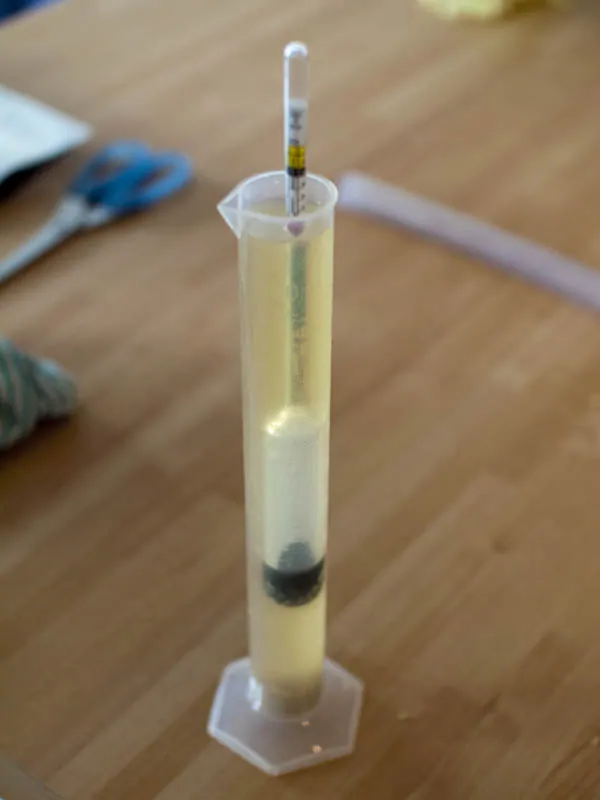
So, I started again, only this time I waited for the bubbler to cease all activity. Having learned how to use a hydrometer correctly, I took a specific gravity reading and left it for a couple of days. Took another reading and it had changed. So I left it two more days and repeated. I carried on doing this until I had two unchanged readings. Believe it or not, 3 weeks had elapsed at this point, not the recommended 10 days!
I bottled it, left it for a month and guess what!?! It was drinkable. In fact, it was actually, very much, OK! And using the specific gravity readings, I had been able to properly calculate the strength of it . Hoorah!
So after a number of failures and a number of years, I had finally managed to get it right. And things have progressed since then. The ‘can kits’ have improved, and similar ‘pouch kits’ are also available. They are a great entry into the world of BYO (Brew Your Own), whether you just want the satisfaction of making it yourself, or you just want cheap beer! Just remember, patience is key!