
Here is the first, of hopefully many, brew day posts.
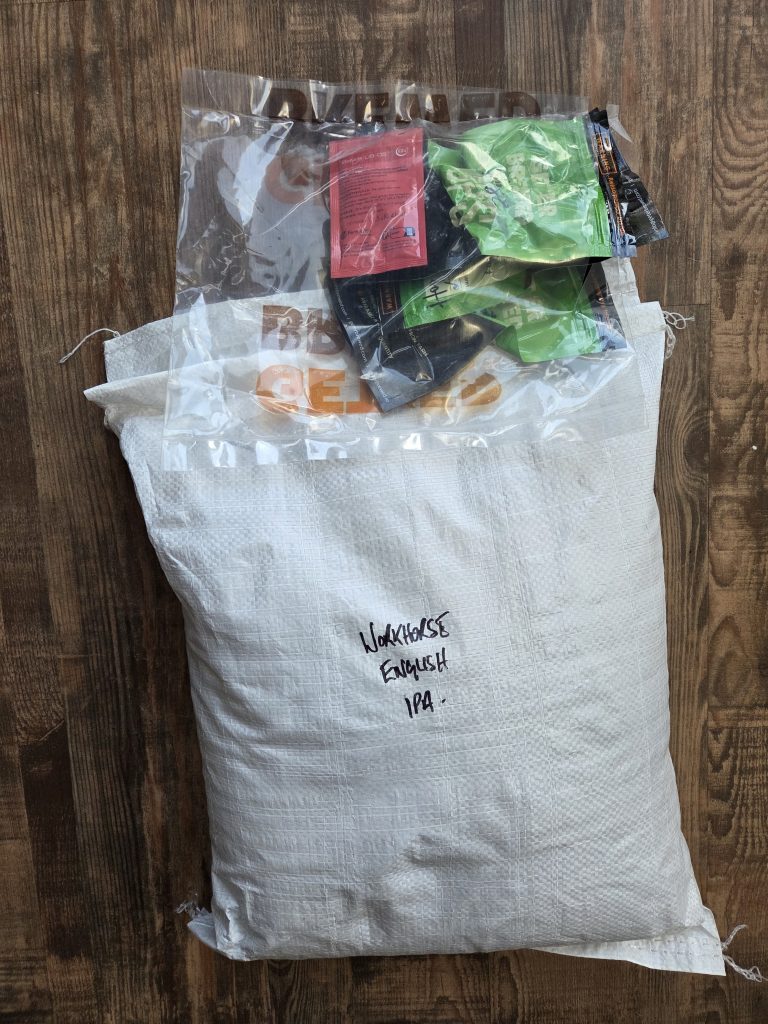
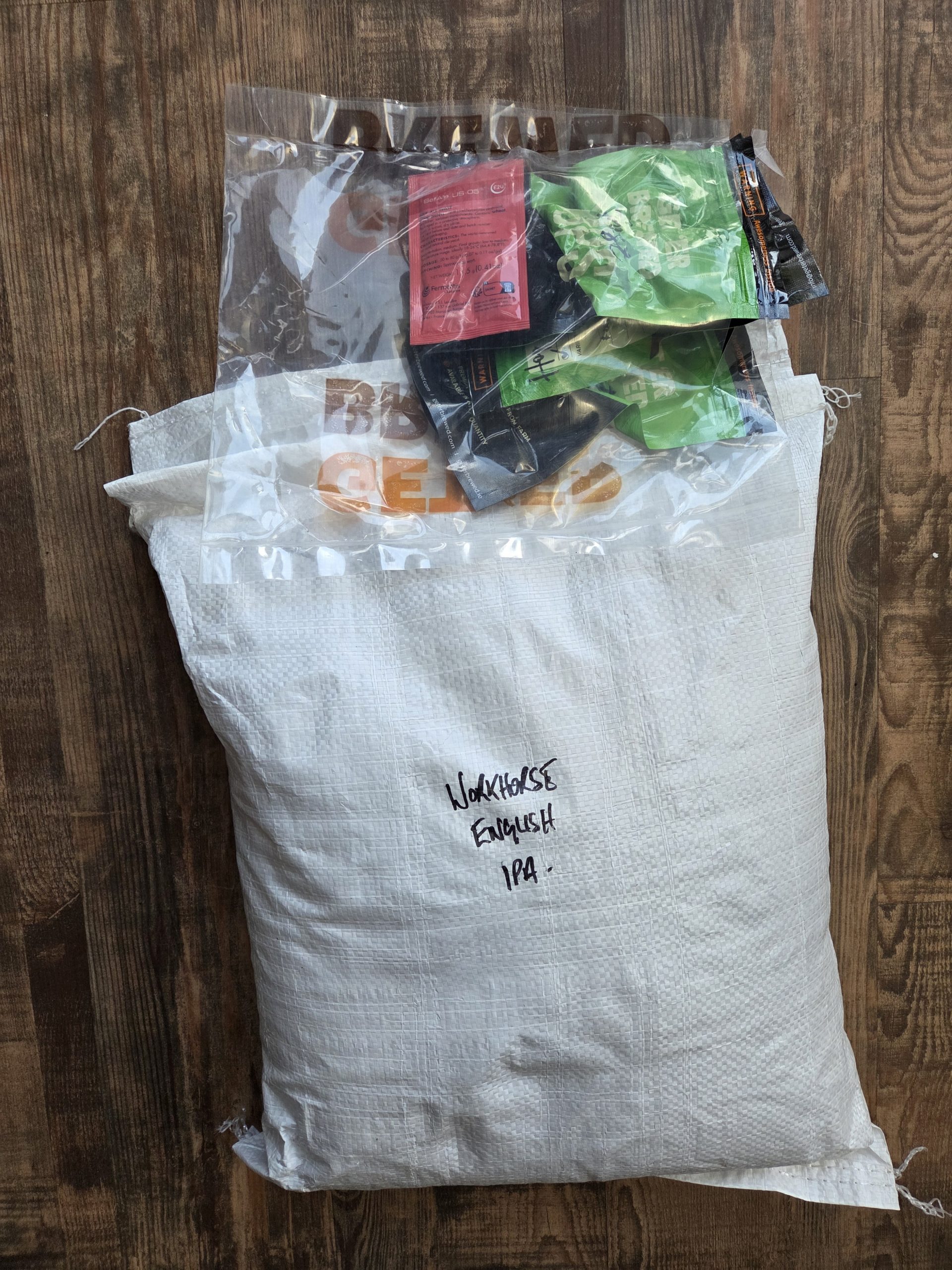
What am I brewing, you may ask. Well I’m brewing a Workhorse English IPA from Get Er Brewed. At this point I hasten to add that I am in no way sponsored or affiliated with this homebrew supplier, however I like their all grain kits and like to be completely open about where I buy ingredients from, and how good they are.
First things first, what do you get in the kit? Well this is a pretty simple recipe, with only two types of malt (Planet Pale malt and Munich Malt, and two different types of hops (Fuggles and East Kent Goldings). You also get a sachet of Fermentis US-05 yeast. Finally, there will also be an instruction sheet with mash and boil times, opening and final gravity figures and hop addition times. There will also be temperatures for mashing and fermentation. It even contains your strike water volume!
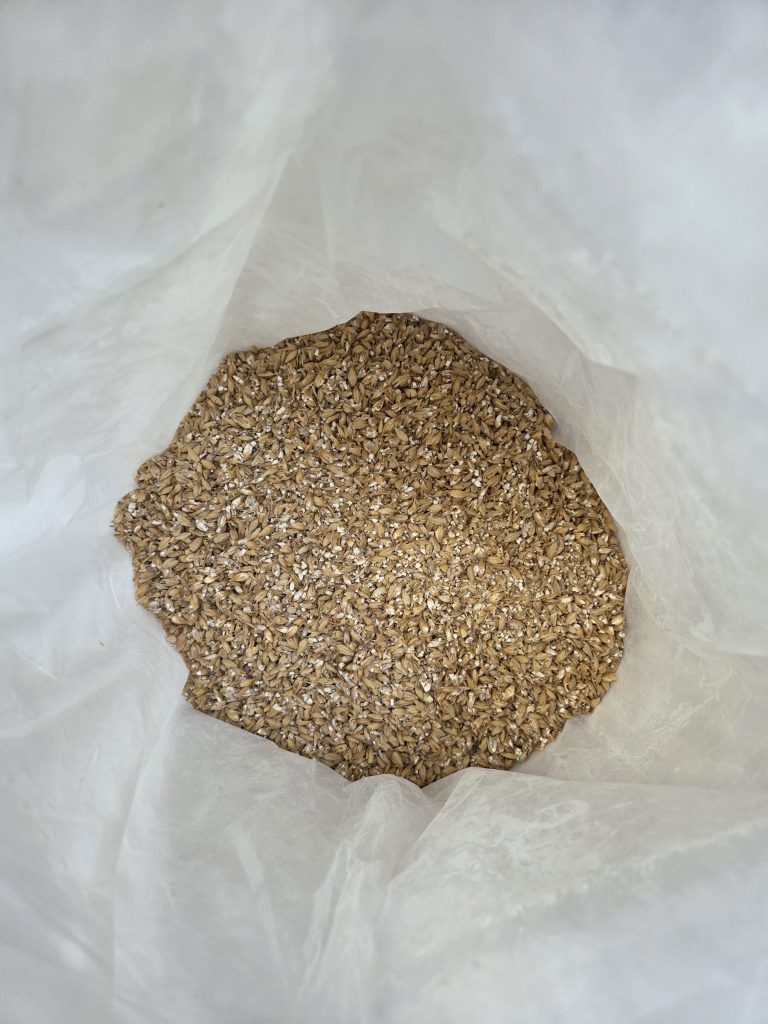
The malt comes pre-mixed and, in my case, already crushed. You can opt to crush your own if you want to adjust the size or just store for longer before you brew. The hops are vacuum packed in tea bag form, annotated with the correct times to add them to the boil. This is brilliant touch as it saves you having to separate and weigh the hops if you have different addition times for the same type of hops.
When I’m brewing I tend to use a calculator on Brewers Friend to figure out what temperature my strike water should be. In this instance it was around 70°C (158°F) to achieve a mash temperature of 63°C (145°F). I use a 30L Royal Catering mash tun (2500W heater) and it took around 20 minutes to get up to temp.
Whilst the water is getting up to temperature, I’ll mix up a sanitising solution in my fermentation bucket, leaving anything that will come into contact with the wort in there.
Whenever I open the bag of malt, I always take a second to take a deep breath and enjoy the smell, followed by the obligatory tasting of a pinch of grain. After that, in it goes. I tend to pour some in then stir and repeat to avoid any doughballs (clumps of malt that will be dry in the middle). Doughballs are one of the primary culprits of preventing you hitting the target opening gravity.
Fast forward one nurturing hour, and I’m ready to pull the grain out and get the rolling boil on the go. This can be a painful wait as with my setup, it takes around twenty minutes to get up to boiling temp. And before you ask, yes I did slop wort all over the floor trying to get the grain basket outside to the bin. That stuff should be marketed as nice smelling super glue.
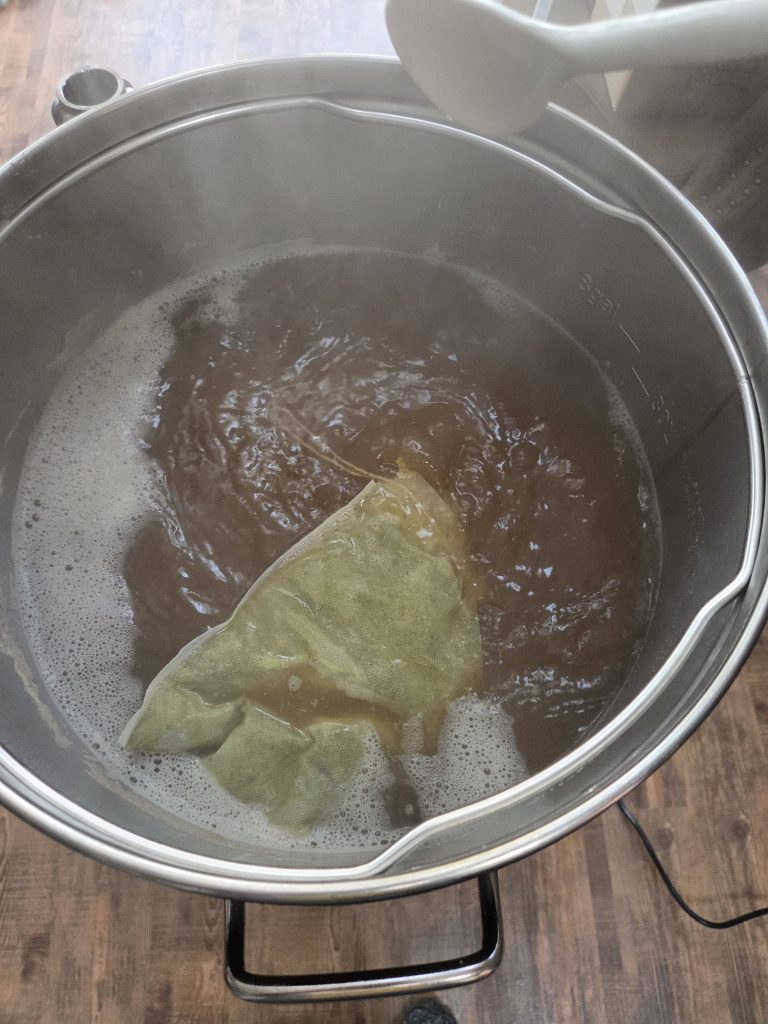
Once the boil is on the go, the first of the hop additions is added. In this case, they come in tea bag form which, as the name suggests, comprises of hop pellets in a bag like pouch that you tie off and throw in. Sadly, I forgot to tie the first one, meaning I had to fish it back out and knot it, whilst burning my hands with beery napalm.
Half an our later, the second hop addition goes in, this time tied properly. About fifteen minutes from the end, the whirlfloc tablet is added. This helps clear the beer of undesirable proteins and is supposed to improve the finish. I also pop my stainless steel cooling coil to sanitise it at this point.
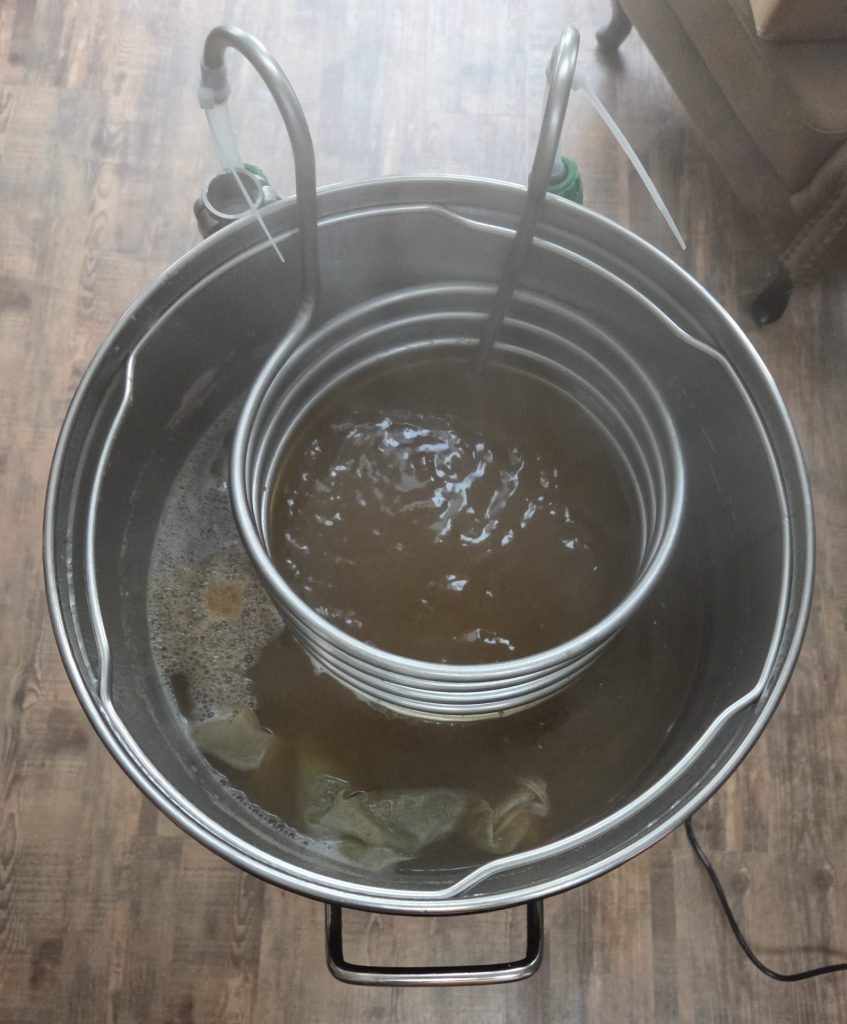
Finally, the last hop addition goes in as we turn off the heat and left in for about a quarter of an hour.
The beer is then chilled to around 20-25°C (68-77°F) whish is ideal for activating the yeast. To do this, the cooling coil is connected to the garden tap. It really is surprisingly effective and quickly cools the wort down. Once down to temperature, I transfer the mix to the aforementioned fermentation bucket. This is basically a giant, lidded, plastic bucket with a tap and airlock, with the sanitising solution now poured out.
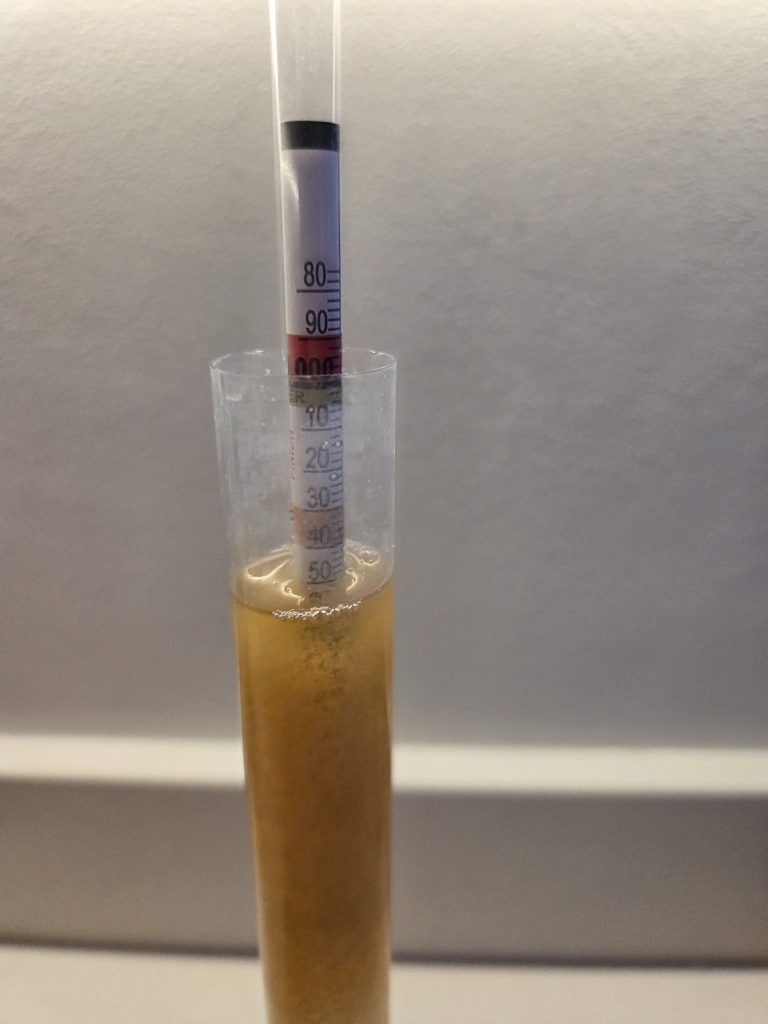
I then draw off some of the wart to measure the specific gravity, using my hydrometer. I also take a temperature reading in case I need to adjust the gravity reading as my hydrometer is calibrated to 20°C. In this instance, I overshot the target. It should have been 1.044 but I ended up hitting 1.050. On the upside, it is potentially a stronger beer.
All that’s left to do is sprinkle in the yeast, secure the lid, put water in the airlock and leave it somewhere warm(ish) to ferment. There is genuinely nothing more satisfying than hearing the little “bloble” from the airlock. When this brew is ready to bottle, I’ll post a follow-up. In the meantime, feel free to get in touch with any questions.