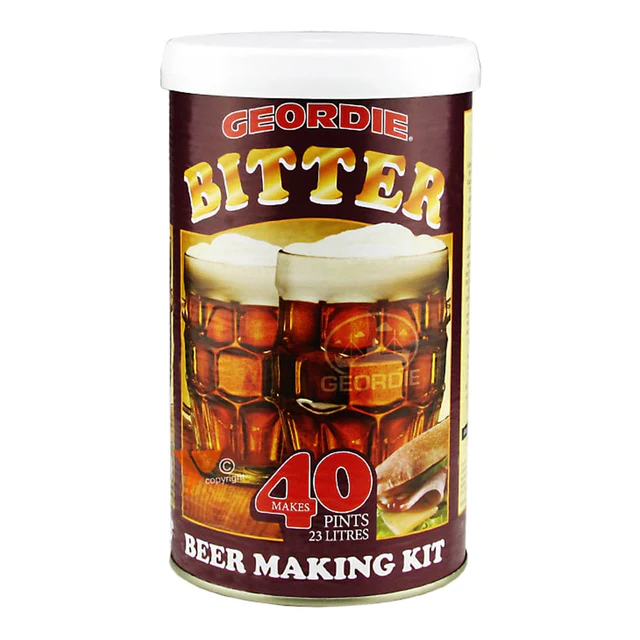

My beer has been merrily bubbling away over Christmas and by New Year, it had very definitely stopped. Over the course of a couple of days, I took specific gravity readings and confirmed that there was no more activity.
To be fair, any kind of fermentation had probably finished a week before, but it was Christmas and I was too busy eating and drinking to bother checking. My final gravity reading was 1.006, which is below the suggested final gravity in the brewing instructions. This isn’t an issue, it just means I’ll have a slightly stronger beer! This is especially true as I also overshot the opening gravity (it should have been 1.044 but I hit 1.050). In hindsight, I could’ve corrected the opening gravity figure, but quite honestly, I didn’t think to.
When it comes to bottling homebrew, I like to dissolve the carbonation sugar in a bit of boiled water, throw it into the brew, give it a stir, let it settle and then bottle it. In the past, I tried to spoon a few grams of sugar into each bottle but trust me, that is not practical. You just end up with sticky fingers and sugar all over the shop.
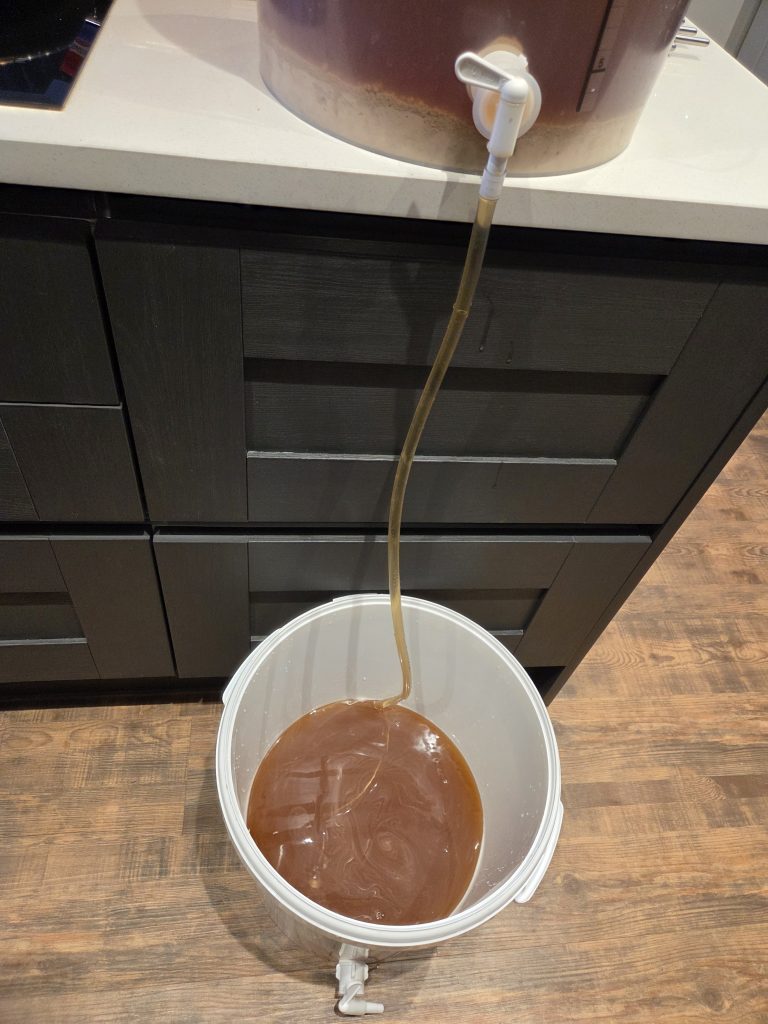
All that being said, I tried something new this time round. In an effort to minimise the amount of sediment in the bottles, I racked my homebrew to a secondary vessel. The idea being that a lot of the sediment is left behind in the first bucket. I also put my boiled water/sugar mix in the second vessel prior to syphoning the beer into it so that it all mixed as I went along.
Once the brew was racked to the secondary vessel, I left it to stand for twenty minutes to allow any carried over sediment to settle.
In preparation for bottling, I had run my bottles through the dishwasher on a boil was the day before. Then as the brew was settling in the secondary, I washed the bottles in a no-rinse sanitiser solution, and left them to drain.
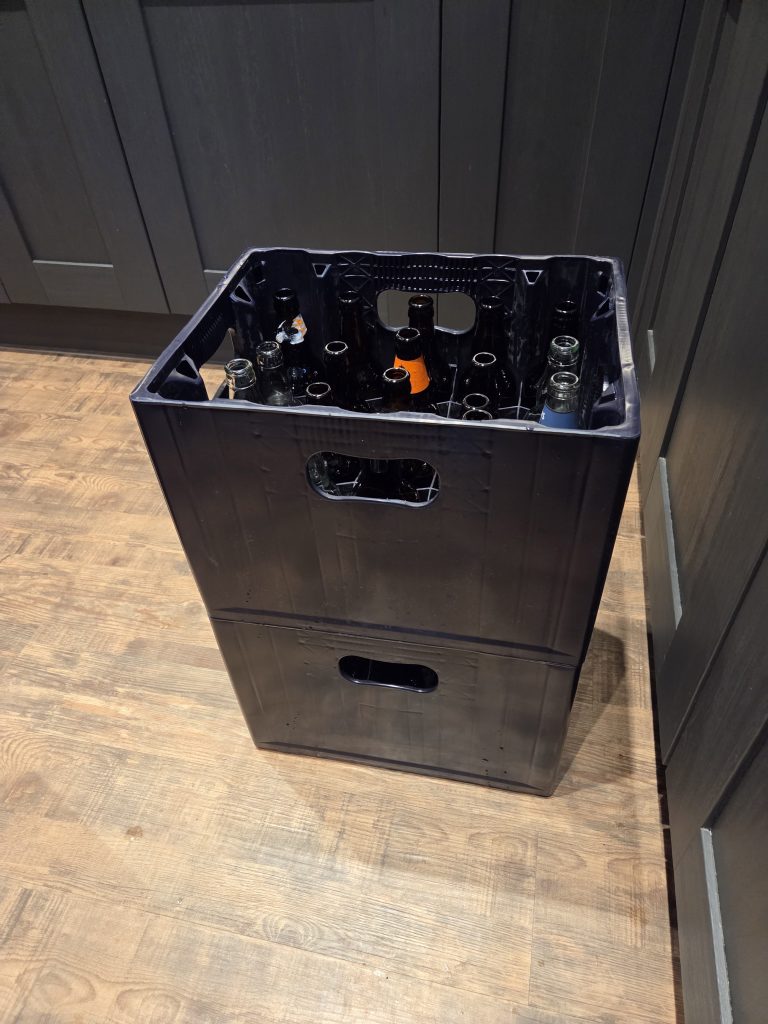
The bottling process can be a bit tedious. I do have a bottling wand on my bucket which does make life easier, but having to repeatedly fill forty bottles does get boring and you will inevitably spill some beer. In my case, I sometimes catch the end of the filling wand and it flicks beer all over the kitchen.
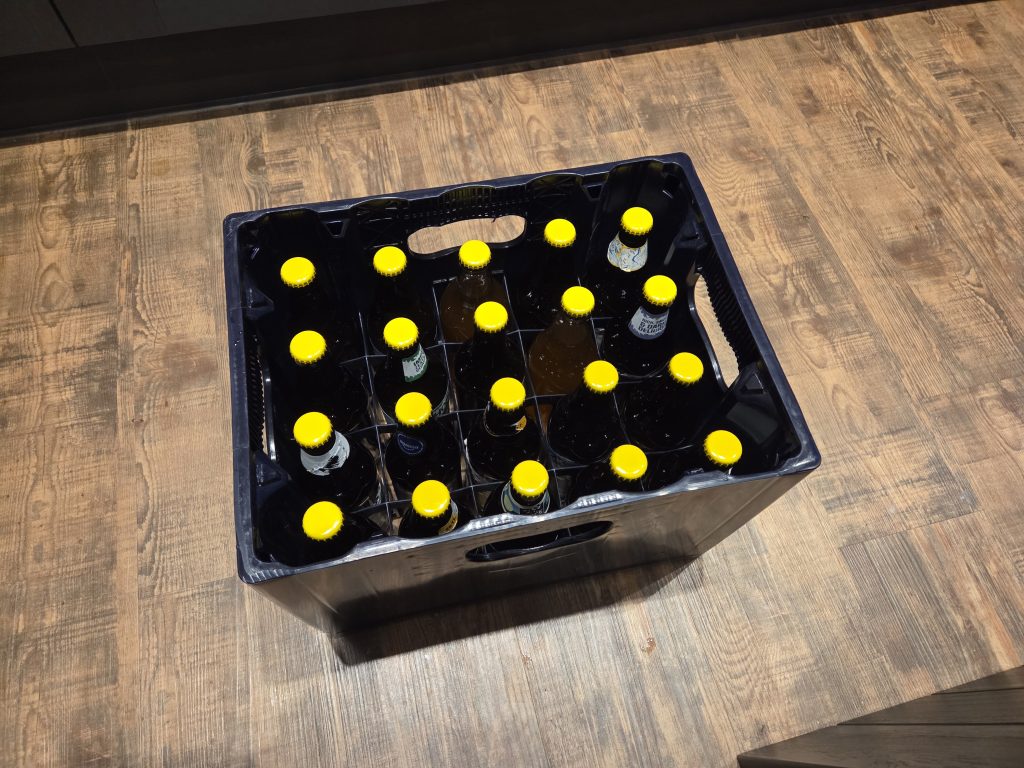
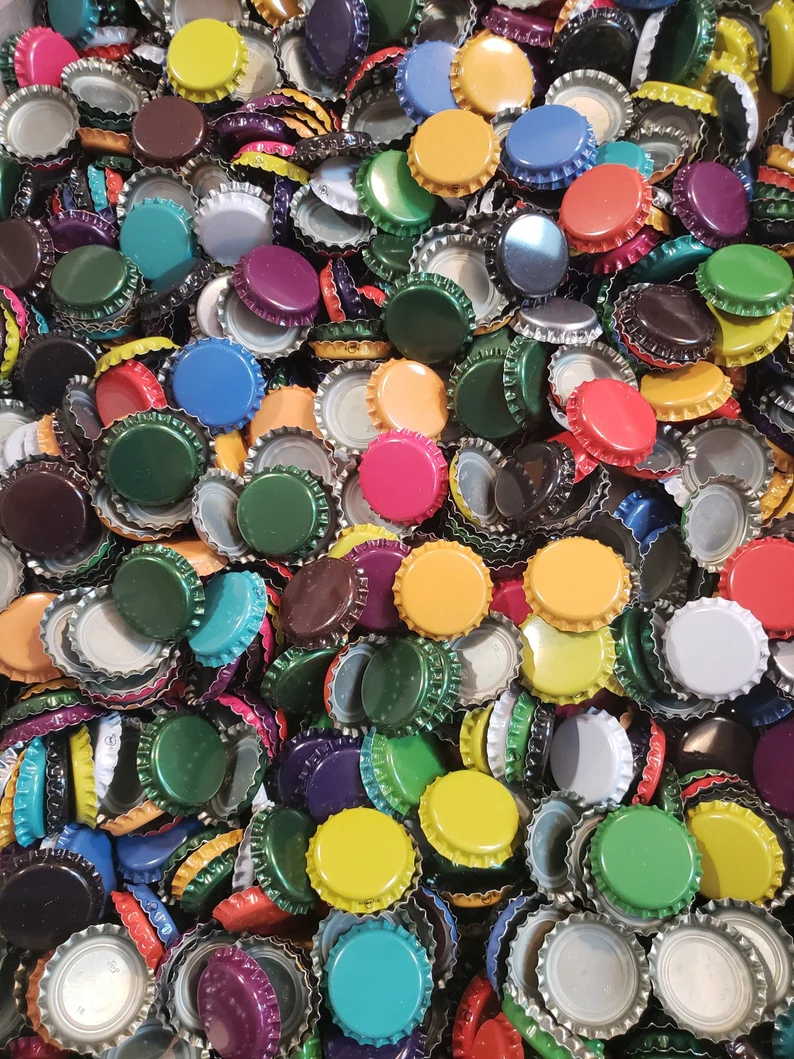
The capping I find very satisfying and when ordering all grain kits from Get er Brewed (again I’m not sponsored by them but I’m always open to offers) you have the option to add free bottle caps. Every time I’ve ordered a kit, I’ve received different coloured caps. Since I don’t label my bottles, I use the different colours to identify the beer.
The only downside when capping is that some of my bottles are a different height. Thankfully my bottle capper is adjustable but having to change it really does ruin the zen-like state I enter when pulling that lever.
Annoyingly, I ended up with thirty-nine bottles. There wasn’t enough to get the full forty. If I had have corrected the opening gravity, I might have had enough but hey ho, that’s the way it goes sometimes.
I now just need to wait a few weeks before I can try them. Already, the bottles look like they have less sediment in them than normal. I just hope I haven’t over carbonated them as this can, at best, lift all the sediment when opened. At worst, the bottles could just explode.
Using the ABV (alcohol by volume) calculator on the Brewers Friend website, it should be sat at around 5.78%. If I had managed to hit the correct specific gravity figures, it should have been around 4.65%. But I’m not going to lose any sleep over that.
I’ll post an update when I finally get round to opening them. In the meantime, feel free to get in touch with any questions or comments!